




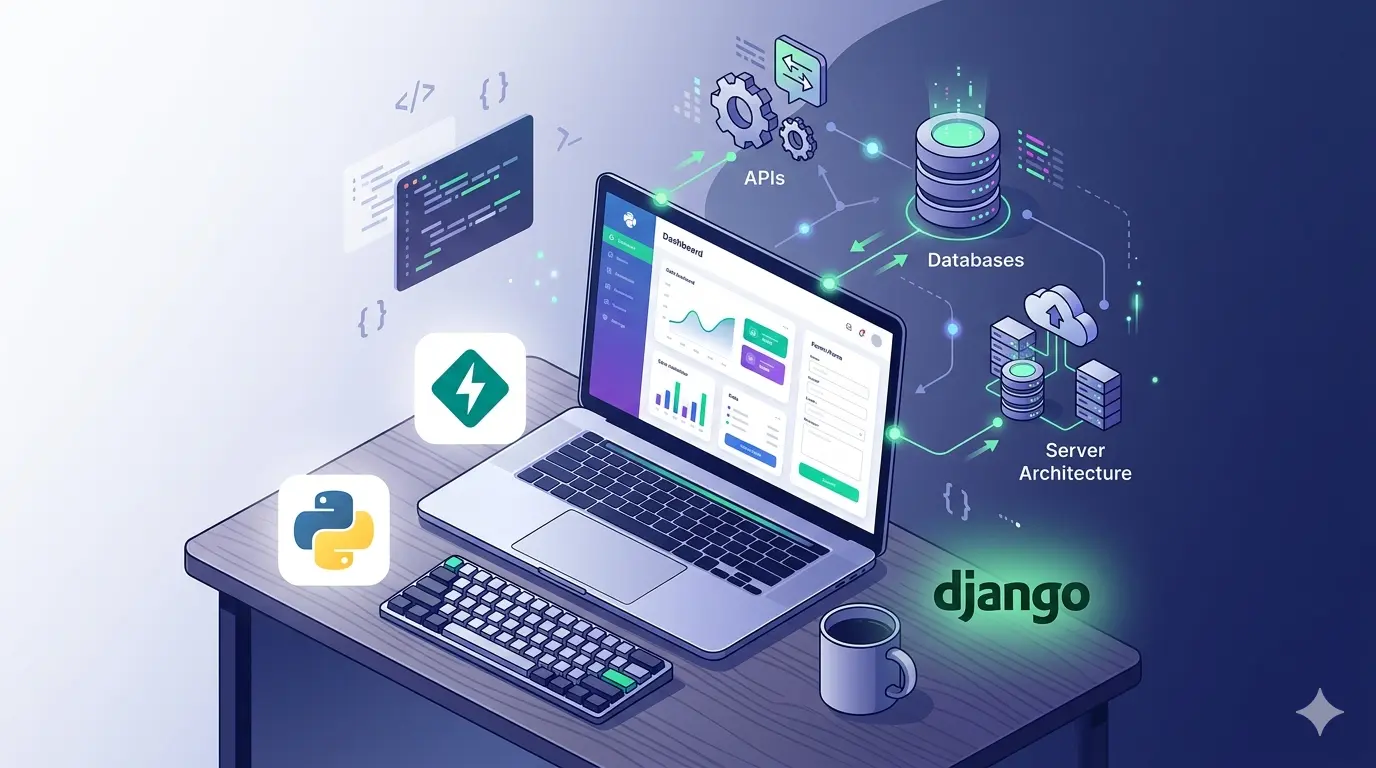
Modern software systems are built using multiple layers that work together to deliver seamless user experiences. This layered structure is known as a stack. Developers who can work across both frontend and backend systems are called full stack developers.
Full Stack Python development involves building user interfaces, backend services, and database systems using powerful Python frameworks such as FastAPI and Django, combined with React for frontend applications.
Introduction to Full Stack Python
A full stack system consists of three main layers: frontend, backend, and database. The frontend handles user interaction, the backend processes business logic, and the database stores application data.
Python has become one of the most powerful technologies for building full stack applications due to its simplicity, flexibility, and strong ecosystem of frameworks.
What is Full Stack Python Development
Full Stack Python refers to using Python for backend systems while integrating with modern frontend frameworks like React. It enables developers to build complete, scalable web applications.
A typical architecture includes a React frontend, a Python backend using FastAPI or Django, and a database such as PostgreSQL or MySQL.
Why Python is Dominating Web Development
Python is widely adopted due to its clean syntax, readability, and strong developer productivity. It allows developers to write less code while building powerful applications. Frameworks like Django and FastAPI simplify backend development and reduce complexity. Python also integrates easily with modern technologies. This makes it a preferred choice for startups and enterprises. Its flexibility supports everything from small apps to large systems.
Another reason for Python’s popularity is its massive ecosystem and community support. Developers have access to thousands of libraries and tools. Python works seamlessly with cloud platforms like AWS and Google Cloud. It is also heavily used in AI, data science, and automation. This multi-purpose capability makes it ideal for modern web development. Businesses rely on Python for building scalable and maintainable applications.
Overview of FastAPI
FastAPI is a modern Python framework designed for building high-performance APIs. It is built on top of Starlette and Pydantic, which provide speed and data validation. FastAPI uses asynchronous programming to handle multiple requests efficiently. It also supports Python type hints for better code clarity. Developers can build APIs quickly with minimal setup. This makes FastAPI ideal for modern backend systems.
Core Features of FastAPI
FastAPI offers several powerful features that improve development speed and performance. It automatically generates API documentation using Swagger and ReDoc. Built-in data validation ensures reliable data handling. Asynchronous support allows handling thousands of concurrent requests. Type hints improve code readability and reduce errors. These features make FastAPI one of the fastest growing Python frameworks.
Overview of Django
Django is a high-level Python web framework that follows a batteries-included approach. It provides built-in tools for authentication, database management, and routing. Developers can build full applications without relying on many external libraries. Django is known for its stability and scalability. It is widely used by large organizations and startups. This makes it a reliable choice for production systems.
Core Features of Django
Django includes a powerful ORM that simplifies database operations. It also provides a built-in authentication system for user management. The admin panel allows developers to manage data easily. Security features protect against common vulnerabilities. Django follows a structured architecture that improves maintainability. These features make it ideal for complex applications.
FastAPI vs Django
FastAPI and Django serve different purposes in web development. FastAPI is designed for building fast and efficient APIs. Django is a full-featured framework for complete web applications. FastAPI is lightweight and modern, while Django is comprehensive and mature. The choice depends on project requirements. Both frameworks are powerful and widely used in production.
React as the Frontend for Python Applications
React is a popular JavaScript library for building interactive user interfaces. It uses a component-based architecture that improves code reusability. The virtual DOM ensures efficient rendering and better performance. React allows developers to create dynamic and responsive applications. It integrates easily with backend APIs. This makes it ideal for modern frontend development.
Full Stack Architecture with React and Python
A modern full stack architecture consists of a React frontend and a Python backend. The frontend handles user interactions and UI rendering. The backend processes business logic and API requests. Databases store and manage application data. APIs act as the communication bridge between layers. This architecture ensures scalability and maintainability.
Building APIs with FastAPI
FastAPI simplifies API development using Python type hints and async functions. Developers can create endpoints quickly with minimal boilerplate code. The framework automatically validates request data. It also generates interactive API documentation. FastAPI supports modern RESTful design patterns. This makes API development faster and more efficient.
Building Applications with Django
Django allows developers to build complete web applications efficiently. It provides tools for models, views, and templates. The built-in admin panel simplifies data management. Django’s ORM makes database interactions easier. Developers can implement authentication quickly. This makes Django ideal for large-scale applications.
Connecting React with FastAPI
React connects with FastAPI through HTTP requests using Fetch or Axios. The frontend sends requests to API endpoints. FastAPI processes the request and returns JSON data. React updates the UI based on the response. This creates a dynamic user experience. Proper API design ensures smooth communication.
Connecting React with Django
React can integrate with Django using Django REST Framework. The backend exposes API endpoints for frontend use. React consumes this data and renders dynamic content. Authentication is handled using tokens or sessions. This separation improves scalability. It allows frontend and backend to evolve independently.
Database Layer in Full Stack Python
Databases store and manage application data efficiently. Common choices include PostgreSQL, MySQL, and SQLite. ORM tools simplify database interactions. Developers can define models instead of writing SQL queries. This improves code readability and maintainability. Proper database design ensures scalability.
Authentication and Security
Security is critical in modern web applications. Authentication methods include JWT, OAuth, and session-based systems. Developers must validate inputs to prevent attacks. Encryption protects sensitive data. Secure APIs ensure safe communication. Following best practices reduces vulnerabilities.
Performance Optimization
Performance optimization improves application speed and efficiency. Techniques include caching and asynchronous processing. Database indexing reduces query time. Load balancing distributes traffic across servers. CDN improves content delivery speed. These strategies ensure better user experience.
Deployment of Full Stack Python Applications
Deployment involves hosting applications on servers or cloud platforms. Tools like Docker help package applications. CI/CD pipelines automate deployment processes. Cloud platforms provide scalable infrastructure. Monitoring ensures system stability. Proper deployment strategies improve reliability.
Real World Use Cases
Full stack Python is used in various real-world applications. These include AI systems, SaaS platforms, and ecommerce websites. Data analytics dashboards also rely on Python. Backend APIs power many modern applications. React provides interactive user interfaces. This combination is widely adopted.
Best Practices for Full Stack Python Development
Developers should follow best practices for maintainable code. This includes modular architecture and clean code structure. Writing tests ensures reliability. Documentation improves team collaboration. Version control helps track changes. These practices improve long-term project success.
Common Mistakes Developers Make
Common mistakes include poor API design and weak security. Developers often mix frontend and backend logic. Lack of modular structure causes issues. Inefficient database queries reduce performance. Ignoring testing leads to bugs. Avoiding these mistakes improves application quality.
Future of Python Full Stack Development
The future of Python full stack development is rapidly evolving. AI integration is becoming more common. Microservices architecture is gaining popularity. Serverless computing reduces infrastructure management. Edge computing improves performance globally. These trends will shape modern applications.
Frequently Asked Questions
Full Stack Python involves building complete applications using Python and frontend technologies like React. It includes backend APIs, databases, and UI development. Python frameworks simplify development. React enhances user experience. This combination is widely used in modern applications.
Conclusion
Full Stack Python development provides a powerful way to build modern applications. Combining React with FastAPI or Django creates scalable systems. Developers can build high-performance applications efficiently. This stack supports both startups and enterprises. It remains one of the best choices for web development.